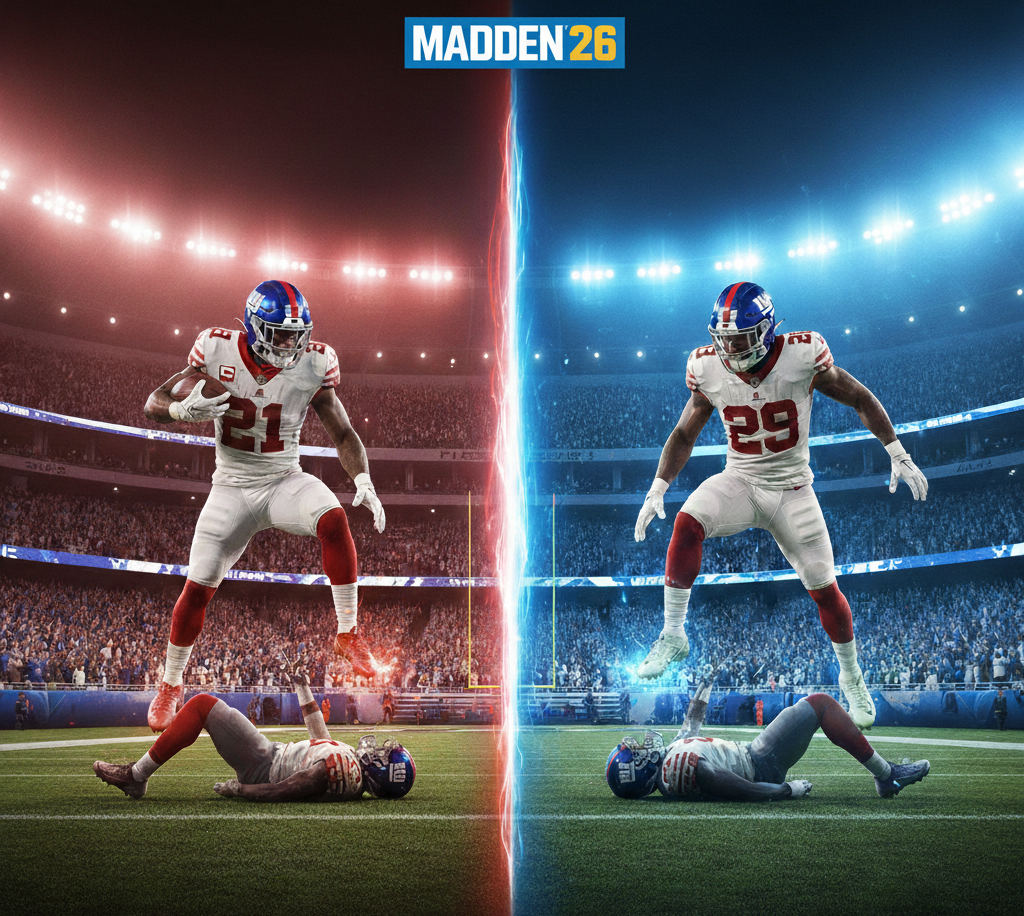
Few plays in modern football feel as jaw-dropping as the reverse hurdle. When Saquon Barkley pulls it off, it looks almost unreal—a running back changing direction in mid-air to avoid a defender who thought the angle was perfect. In , this move has become legendary not just on highlight reels, but also in football video games where timing, awareness, and player control matter more than ever.
Whether you’re trying to recreate Saquon’s athletic brilliance in-game or simply understand how this move works and when to use it, this guide breaks everything down. From real-world mechanics to in-game execution, here’s how to master Saquon’s signature reverse hurdle without turning it into a turnover.
What Exactly Is the Reverse Hurdle?
A traditional hurdle is simple: jump over a defender who’s diving low. The reverse hurdle adds an extra layer of difficulty. Instead of leaping straight ahead, the ball carrier subtly changes direction while airborne, avoiding a tackle attempt from behind or from an unexpected angle.
Saquon’s version stands out because:
-
He reads the defender late
-
He plants aggressively before jumping
-
He twists his hips mid-air
-
He lands balanced and keeps momentum
It’s not just a jump—it’s controlled chaos.
Why Saquon Barkley Can Do What Others Can’t
The reverse hurdle isn’t something every running back can attempt safely. Saquon’s physical traits make it possible.
He combines:
-
Elite lower-body explosiveness
-
Rare hip flexibility
-
Exceptional body control
-
Fearless decision-making
In games that model player attributes realistically, these traits matter. Without high agility, balance, and jumping ability, attempting a reverse hurdle usually ends badly.
When the Reverse Hurdle Actually Makes Sense
One of the biggest mistakes players make—both in real football discussions and in games—is trying to reverse hurdle too often.
This move works best when:
-
A defender commits low
-
The angle is slightly behind or to the side
-
You have forward momentum
-
There’s open space after the jump
It does not work well in tight traffic, near the sideline, or against upright defenders who haven’t committed.
Think of it as a reaction move, not a planned one.
How the Reverse Hurdle Is Represented In Games ( Meta)
In modern football games, signature moves like Saquon’s reverse hurdle are usually tied to:
-
Player archetypes
-
Special ability traits
-
Context-sensitive inputs
You can’t spam it. The game checks:
-
Defender positioning
-
Your speed and stamina
-
Player ratings (agility, jumping, balance)
This keeps the move realistic and rare—just like in real life.
Step-by-Step: How to Pull Off the Reverse Hurdle In-Game
While exact button inputs depend on your control layout, the process stays the same across versions.
First, approach the defender at a controlled sprint—not full turbo. Over-sprinting reduces your reaction window.
Second, read the tackle animation. You’re looking for a low dive or ankle attempt, not a conservative wrap-up.
Third, trigger the hurdle slightly later than a normal jump. This is crucial. Early inputs result in standard hurdles or collisions.
Fourth, subtly guide your left stick away from the defender’s momentum during the jump. This creates the “reverse” motion.
Finally, be ready to protect the ball on landing. The move doesn’t end until you regain balance.
Attributes That Make or Break the Move
Not every running back can reverse hurdle, even if the input is correct.
The most important attributes are:
-
Agility (for mid-air adjustment)
-
Jumping (for clearance)
-
Balance (for landing)
-
Acceleration (to escape after landing)
Saquon-type backs excel because they rank high across all four. Power backs may jump—but they won’t redirect cleanly.
Common Mistakes Players Make
The reverse hurdle looks flashy, which leads to overconfidence. Most failed attempts come from poor decision-making, not bad inputs.
Common errors include:
-
Attempting it against standing defenders
-
Triggering it too early
-
Using it in traffic
-
Forgetting ball security afterward
Remember: the move is meant to avoid a tackle, not create a highlight every run.
Reverse Hurdle vs Spin vs Juke: When to Choose What
Understanding when not to reverse hurdle is just as important.
Use a juke when the defender is upright and square.
Use a spin when contact is inevitable but space exists.
Use a reverse hurdle when the defender commits low and late.
Saquon’s greatness comes from choosing the right tool, not just the flashiest one.
Risk vs Reward: Is It Worth It?
In both real football and games, the reverse hurdle is high risk.
The reward:
-
Avoids a sure tackle
-
Maintains forward momentum
-
Can flip field position instantly
The risk:
-
Fumble chance
-
Injury chance (in realism modes)
-
Loss of balance
That’s why even Saquon doesn’t use it often. When it appears, it’s because the situation demands it.
Practicing the Move Without Punishment
The best way to learn the reverse hurdle is controlled repetition.
Practice tips:
-
Use training modes
-
Slow down gameplay speed initially
-
Practice reading defender animations
-
Focus on timing, not stick movement
Once the timing clicks, the movement feels natural.
Why the Reverse Hurdle Is So Iconic
The reason Saquon’s reverse hurdle resonates isn’t just athleticism—it’s improvisation. It represents a split-second decision made under pressure, where instinct beats planning.
That’s why it feels special when it works, and why games treat it as a rare moment instead of a spam move.
Final Thoughts
Mastering the reverse hurdle isn’t about memorizing inputs—it’s about understanding space, timing, and commitment. Saquon Barkley’s signature move works because it’s reactive, not reckless. It’s used when defenders think they’ve won the angle—and suddenly realize they haven’t.
If you slow the game down, read the defender, and respect the risk, the reverse hurdle becomes one of the most satisfying moves you can pull off. Not because it happens often—but because when it does, it feels earned.
That’s the real secret behind Saquon’s magic:
perfect timing beats flashy intent—every time.