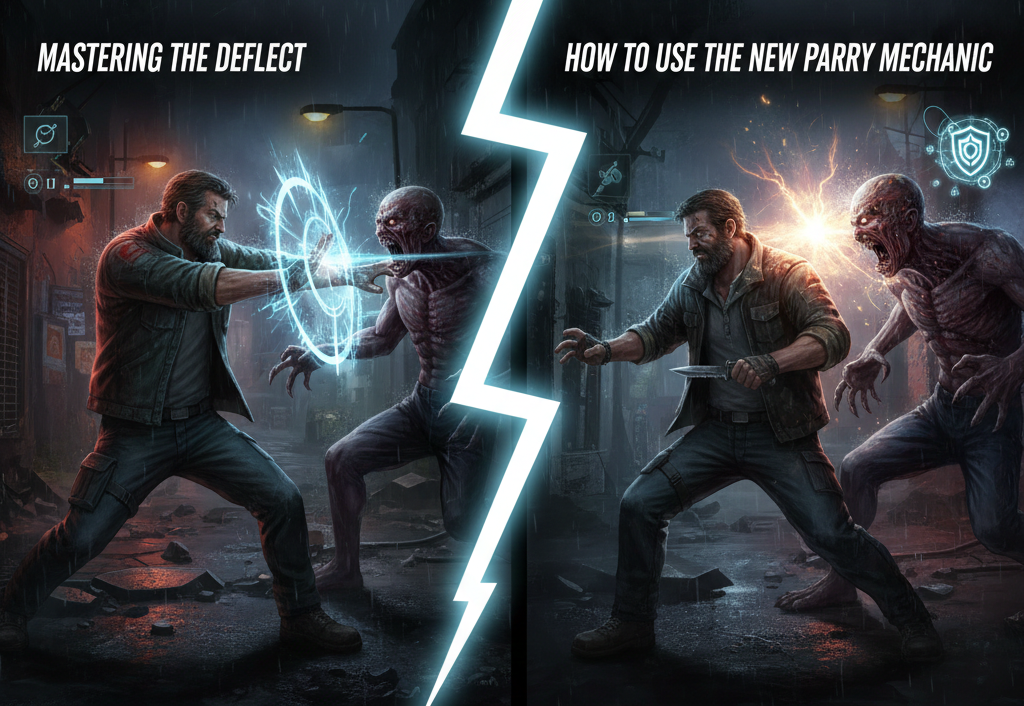
With Resident Evil: Requiem, Capcom has taken a bold step forward by introducing one of the most impactful combat changes the series has seen in years: the deflect (parry) mechanic. In a franchise known for deliberate pacing, limited resources, and constant tension, adding a parry system might sound risky—but in RE: Requiem, it works brilliantly.
Players are asking the same questions: How does the parry work? Is it mandatory? When should you deflect instead of dodging? This guide breaks down everything you need to know about the new parry system, explaining it in a simple, practical way so you can survive longer, save resources, and stay in control when things get terrifying.
What the New Parry Mechanic Is (and What It Isn’t)
The deflect in RE: Requiem is not an action-game parry designed for constant use. It’s a high-risk, high-reward defensive option meant to give skilled players a way to turn desperate moments into brief advantages.
A successful parry:
-
Interrupts enemy attacks
-
Prevents damage entirely
-
Creates a short counter window
-
Often staggers or pushes enemies back
A failed parry, however, leaves you exposed—sometimes worse off than if you had simply blocked or dodged. This keeps the survival-horror identity intact.
Why Capcom Added Parrying to a Survival Horror Game
At first glance, parrying feels like something from an action title, not survival horror. But in RE: Requiem, it serves a different purpose.
Capcom designed the parry to:
-
Reduce reliance on ammo
-
Reward calm decision-making under pressure
-
Add depth to close-quarters encounters
-
Increase player agency without removing fear
You’re not meant to parry constantly. You’re meant to use it when panic would normally take over.
Understanding the Parry Timing Window
Timing is everything. The parry window in RE: Requiem is intentionally tight and unforgiving. You must trigger the deflect just before the enemy attack connects, not during the wind-up and not after impact.
Many players fail early because they react too soon. Enemy animations are slower and heavier than in action games, and reacting to movement rather than sound cues is crucial.
A reliable tip:
Parry when the enemy’s attack commits forward—not when it starts.
Practicing against basic enemies early in the game helps you learn this rhythm without severe punishment.
Which Enemy Attacks Can Be Parried
Not every attack in RE: Requiem can be deflected. This is a key design choice that preserves tension.
Parry-friendly attacks usually include:
-
Single, committed melee strikes
-
Lunging attacks with clear animation tells
-
Heavy swings that lock enemies in place
Attacks you should avoid parrying:
-
Multi-hit flurries
-
Grab chains
-
Explosive or area-based attacks
-
Unfamiliar boss patterns
Learning what not to parry is just as important as learning how to parry.
Parry vs Dodge vs Block: Choosing the Right Defense
The new combat system gives you three defensive options, and mastering RE: Requiem means knowing when to use each.
Dodging is the safest choice for unpredictable or fast enemies. Blocking reduces damage when your timing isn’t perfect. Parrying is for moments when you read the enemy correctly and need breathing room.
High-level play is about mixing defenses, not relying on one.
What You Gain from a Successful Parry
A perfect deflect does more than stop damage—it changes the flow of combat.
Benefits include:
-
Guaranteed stagger windows
-
Opportunities for melee counters
-
Safer repositioning
-
Time to reload or heal
-
Reduced ammo usage
In survival horror, time is power. A single parry can prevent a spiral of panic, damage, and wasted resources.
How Parrying Saves Ammo in the Long Run
One of the most important benefits of mastering parries is resource efficiency. Ammo is scarce in RE: Requiem, and spraying bullets to escape every close encounter is not sustainable.
Using parries correctly allows you to:
-
Finish weakened enemies with melee
-
Avoid firing panic shots
-
Control crowd spacing
Over the course of the game, this can mean the difference between surviving late-game encounters or running dry.
Common Parry Mistakes Players Make
Many players struggle with parrying not because it’s unfair, but because of habits carried over from other genres.
The most common mistakes include:
-
Panic spamming the parry input
-
Trying to parry every attack
-
Ignoring spacing and positioning
-
Attempting parries while cornered
Parrying works best when you stay calm and give yourself room to react. If you feel rushed, dodge instead.
Parrying Bosses: Risk, Reward, and Restraint
Boss encounters are where parrying becomes most tempting—and most dangerous.
Some boss attacks are designed specifically to be parried, often rewarding you with large stagger windows or phase interruptions. Others exist to punish overconfidence.
The key rule:
Only parry boss attacks you’ve already seen multiple times.
Observation comes first. Parrying comes second.
Difficulty Settings and Parry Importance
On lower difficulties, parrying is optional. On greater difficulties, it becomes a skill multiplier.
Harder modes feature:
-
Less ammo
-
Tougher enemies
-
Smaller margin for error
In these modes, mastering parries dramatically improves survivability without trivializing combat.
Training Yourself to Parry Consistently
The best way to improve is through focused repetition.
Try this approach:
-
Practice on one enemy type
-
Watch attack animations closely
-
Parry once per encounter, not every time
-
Gradually increase risk as confidence grows
You’re training muscle memory and composure—not reflex speed.
How the Parry Mechanic Changes Resident Evil Combat
The addition of parrying doesn’t turn RE: Requiem into an action game. Instead, it deepens the survival loop.
Combat becomes:
-
More deliberate
-
More expressive
-
More skill-driven
You’re no longer just reacting—you’re making calculated choices under fear.
Final Thoughts
The deflect mechanic in Resident Evil: Requiem is one of Capcom’s smartest combat additions in years. It respects the franchise’s survival-horror roots while rewarding players who stay calm, observant, and disciplined.
You don’t need to parry to survive—but once you master it, survival feels less desperate and more controlled. Each successful deflect is a moment where fear gives way to confidence, if only for a second.
In a game built on tension, that second can save your life.
Learn the timing. Respect the risk. And when the moment comes—deflect with purpose.